


January 18, 2025
By Isaac Owen
Day after day, the media pumps us with news stories and images depicting a degenerating world. Battling for clicks and attention, news outlets have resorted to reporting worst-case scenarios, eye-catching catastrophes, and impending doom. They’ve made a job out of piling onto the heap of reasons we should be angry and scared. Unsurprisingly, many of us have subscribed to this narrative: the world is getting worse. A majority of people worldwide believe that life in the future will be worse than it is now. Polling reveals that the United States and the United Kingdom are particularly pessimistic, with 65% of people reporting being pessimistic about the future.
This hopelessness has made many of us yearn for the past. How sensible is this pessimism about modernity? Was life better in the past than it is now? Is the world truly getting worse? Let’s look at what we know.
In 1800, 95 percent of humanity lived in extreme poverty. Extreme poverty, as defined by the UN, is “a condition characterized by severe deprivation of basic human needs, including food, safe drinking water, sanitation facilities, health, shelter, education, and information” (in terms of income, this amounts to earning less than roughly $1.90 of inflation-adjusted 2011 USD per day). Before the Industrial Revolution—99.9% of the time our species has been alive—practically everyone lived in this condition.
Following the scientific revolution, we began to see poverty rates plummet with the rise and spread of industrialization. By the 1950s, half the world’s population had escaped extreme poverty, and today this figure has fallen to less than 10%. This fact alone is staggering, but the increasing levels of prosperity show no sign of leveling off. By the end of the century, the UN predicts that the average person will be 450% as rich as they are today.
It’s not just economic growth that’s accelerated with industrialization. It’s just about everything we care about. Through innovations in agriculture, medicine, and engineering, we’ve reduced the threats of hunger, disease, and natural disasters so effectively that our ancestors could only look upon our time with envy and awe. These improvements in general safety have predictably led to a significant increase in life expectancy. As recently as 1900, the average person on planet Earth lived to a measly 32 years of age. Today, that number has exceeded 72 years. We’ve more than doubled our lifespans. We’ve literally gained an additional life, and then some.
We’re not only changing the amount of life being lived but also the quality of life being lived. More people live in democracies than in any other century in history; liberal values and human rights continue to spread across the globe; more people are better educated and more knowledgeable than ever before; many have instantaneous access to the greatest works of art, literature, music, and philosophy—a reality our ancestors couldn’t even fathom.
‘That’s all great,’ one might say, “but are we really any better for it? Are we getting any happier?” Modern society is often blamed for having spoiled humanity. We may be more comfortable than we were in the past, but our well-being is supposed to have taken a grim downturn. Modernity is thought to corrupt human nature, sapping us of our spiritual vigor and inner vitality. Our departure from our natural, past circumstances is making us shallow, contemptible, soulless, consumerist, and decadent. I believe those who expound such ideas flirt with a misinformed, luddite worldview that is dangerously pessimistic.
Are we meant to prefer a world without air-conditioning, refrigeration, motorized transportation, plumbing, antibiotics, and the many other gifts of modernity to redeem our supposed lost virtue? In my opinion, a return to these bygone times would change the minds of these romantics all too quickly. As Steven Pinker puts it, pre-modern life was “darkened by starvation, plagues, superstitions, maternal and infant mortality, marauding knight-warlords, sadistic torture-executions, slavery, witch hunts, genocidal crusades, conquests, and wars of religion. Good riddance.”
I confess that contemporary materialism may be legitimately creating a spiritually impoverished culture. The solution to this problem, however, certainly isn’t reinstalling what made the dark ages dark. I don’t deny that various religious superstitions of the past may have provided our ancestors with a sense of meaning. I just hope the doomsayers don’t find it radical to believe that a more honest appreciation of life with all of its wondrous beauty and mystery can be discovered elsewhere. We need not abandon our modern scientific worldview to find profound inner peace and fulfillment.
Many pessimists may concede that life is better now than it was in the past but point to existential crises as a reason for pessimism—the final nail in the coffin of the human project. Polling conducted as recently as 2019 has found that nearly half of the world’s population believes that climate change will likely end the human race. This is completely understandable given the apocalyptic, alarmist language used by the media. Many believe that we have already passed the point of no return, with nothing left to do but twiddle our thumbs while we await our imminent demise. I know personally several people who have decided not to have kids because they believe that climate change will destroy the world of the future to such an extent that they cannot, in good conscience, force their children to live in such conditions. Alas, there is reason for optimism.
Climate change is a solvable problem. Every day, more and more people are harmed by our delayed response to the threat. We need to invest more in clean energy research and development, ushering in an age of long-awaited sustainability. In the meantime, however, humanity will continue to prosper. While climate change will certainly be very bad, it will not be the end of the human race.
Along with climate change, threats like nuclear war, artificial intelligence, and biotechnology pose legitimate existential risks, but there is reason to believe that we can come out the other side. If we act seriously and responsibly to address the threats we face, humanity and its descendants could potentially thrive until the heat-death of the universe. The power to realize this possibility is in our hands. Let’s not lose it.
Isaac Owen can be reached at owen1@kenyon.edu

Release the Board Files
By Henry Haile “If the broad light of day could be let in upon men’s actions, it would purify them as the sun disinfects”. Supreme Court Justice Louis Brandeis’ powerful words were emblematic of the Progressive Era, in which ordinary Americans mobilized against both private and public corruption. Unfortunately, America today would be very familiar…


The People’s Party
Zohran Mamdani Will Spark a New Movement for Change Photo Credit: Michael M. Santiago By Angus Allan As I watch the mayoral campaign of Zohran Mamdani this October, I can’t help but think back to last year, when I was casting my mail-in ballot for Kamala Harris. Although I was hopeful that my vote would…
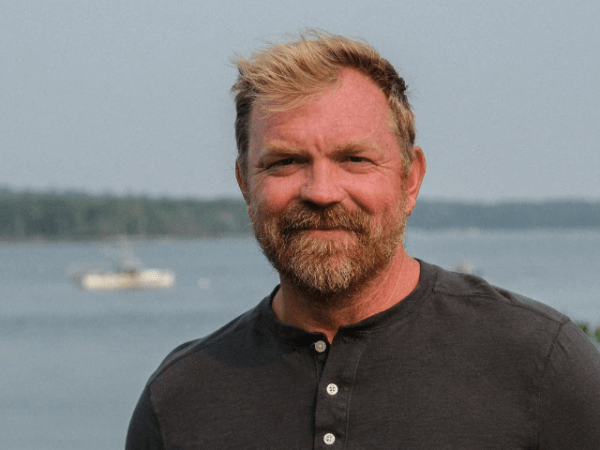
The Grahampaign – Graham Platner’s race for the Senate
_______________________________________________________________________________ September 25th, 2025 By: Henry Haile “America has entered a new Gilded Age–” says Graham Platner– the second to announce his candidacy for Senator Susan Collins’ Senate seat in Maine. The military veteran oysterman running against Collins and “the billionaire class that owns her and all of Washington” is taking an unconventional approach in…



 PATHS
PATHS 
Leave a comment