

January 10, 2025
By Joshua Hertz
In 2017, recently elected French President Emmanuel Macron delivered a speech to the Sorbonne, outlining an ambitious vision of a stronger, more secure, and increasingly sovereign European Union (EU). His suggestions were broad, exploring how unified European policy could address migrant and climate issues, invest in a European digital revolution, remain economically competitive, and most notably, bolster European security through a “common intervention force, a common defense budget and a common doctrine for action.” As Macron put it, “this much-desired Europe grew up sheltered from the rest of the world. Security was not its business: this was performed by America… But the barriers behind which Europe could blossom have disappeared.” At the time, many viewed Macron’s proposals as overly ambitious or merely idealistic direction-setting. But seven years later, as an increasingly insecure Europe approaches both a second Trump administration and a third year of protracted conflict in Ukraine, what was once “overly ambitious” becomes increasingly reasonable.
The situation in Ukraine remains uncertain, a specter of volatility looming over Eastern Europe and its Western allies. Since Russia’s unlawful invasion, both Russian and Ukrainian forces have defied expectations, with Ukraine mounting a surprisingly formidable response and Russia demonstrating an outdated and unorganized military structure. With considerable non-personnel assistance, Ukraine’s counteroffensive campaigns have achieved marked but ultimately limited success. This summer, in the most significant attack on Russian soil since the Second World War, Ukrainian forces launched an incursion into Russia’s Kursk region.

(Petro Zadorozhnyy / State Border Guard Service of Ukraine)
Although impressive, these efforts have failed to dramatically inhibit Russia’s invasion. As the conflict approaches its third year, although both sides face serious challenges, Ukraine’s position is far more dire. While the Kremlin considers raising interest rates above an already concerning 21%, Ukrainians face the winter months with a war-torn energy infrastructure that threatens to leave large sections of the country without electricity, water, or heating. The Kremlin, faced with conscription difficulties, now accepts personnel assistance from the despotic regime in Pyongyang while the Ukrainian military faces a desertion crisis with no relief from personnel assistance. Simply put, both nations cannot, in the long term, endure this status quo; but Russia can endure for far longer.
Trump’s particular brand of foreign policy unusually separates interests from principles. The isolationist flavors of Trump’s consistent “America First” rhetoric, vocal distaste for the NATO alliance, and his willingness to make deals with authoritarian leaders ought to concern nations that rely on U.S. security guarantees. For months, European headlines have questioned whether the EU and European NATO forces could “Trump-proof” Western institutions. Ukraine, the EU, and NATO are justifiably concerned about a U.S. foreign policy increasingly resigned from Europe. With growing U.S. concern towards China, U.S. officials may determine that military resources better serve American interests in the Indo-Pacific rather than Europe. Especially as the war in Ukraine makes Russia weaker, more hostile, and increasingly reliant upon the Chinese economy—a factor which could one day manifest in Russian support for Chinese objectives. Alternatively, Russia looks favorably on this shift, as they stand poised to extract concessions from a more sympathetic U.S. president, less burdened by principle and publicly committed to ending the conflict in a single day.
This dynamic illustrates Macron’s disappearing barriers. The contestation of American unipolarity and Western dominance continues to manifest—weakening bonds between allies. Today, Eastern European nations, especially those scarred by memories of Soviet oppression, lead the charge of European security by bolstering their defense capabilities. But with a combined population of only about 6 million, Western Europe cannot rely on the Baltic states of Estonia, Latvia, and Lithuania to be a defensive bulwark. Europe must appreciate the magnitude of its challenges; not as national or regional issues, but as continental ones. As Macron said in his 2017 speech, “The first key, the foundation of any political community, is security.” The evidence is clear – fragmented cooperation can no longer preserve the benefits of the EU and the security and sovereignty of its members. It’s time to consider ambitious options.
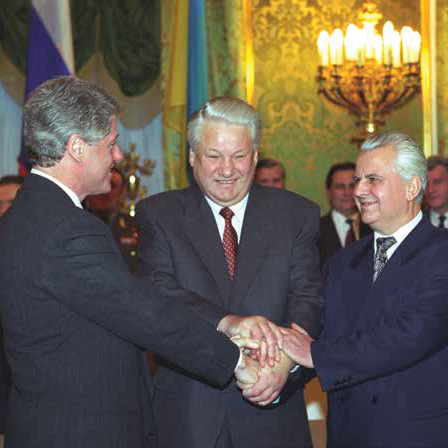
In 1994, the U.S., the U.K., and Russia signed the Budapest Memorandum, a treaty promising security assurances to several states including Ukraine. In exchange, Ukraine relinquished its sizable nuclear arsenal to Russian ownership. However, since Russia’s 2014 annexation of Crimea, the Kremlin has demonstrated a willingness to violate agreements. If the West wishes to halt the already decades-long steady march of Russian encroachment, and if the West desires that any ceasefire agreement not merely be an opportunity for the Kremlin to recoup its forces before continuing, then in the aftermath of any peace agreement, security guarantees must be in place for unannexed Ukraine.
Given Russia’s superior position over Ukraine, very little will push Russia to meaningfully negotiate. In future negotiations, Russia will be unlikely to surrender much of occupied Ukraine. Under the second Trump administration, given Trump’s boastful promises, U.S. officials may try to negotiate directly with the Kremlin, circumventing Ukraine. Trump’s opposition to continued U.S. assistance, combined with his pledges to swiftly end the conflict will likely prove disadvantageous to both Ukraine’s and the Trump administration’s negotiation positions. The Kremlin may agree to a temporary ceasefire and attempt to extract political and territorial concessions at a great cost to Ukraine. This unfortunate circumstance is likely unavoidable. Lastly, with both increased U.S. interest in the Indo-Pacific and Trump’s sympathies for the Kremlin, the U.S. may be hesitant to provide the meaningful security guarantees necessary for long-term European security. This is where Europe must step in.
The Kiel Institute for the World Economy reports that the U.S. has provided nearly $92 billion in total assistance, roughly 68% of which is military support. Globally, this contribution accounts for about half of all foreign military assistance Ukraine has received. In total, EU contributions have reached approximately $133 billion, surpassing the US, but with only about a third of that as military support. Although the EU’s total generosity outstrips US contributions, the nature of their support varies. The EU’s combined $88 billion of economic and humanitarian aid has surely been invaluable. But Ukraine needs more than bandages and financial assistance to protect itself. Clearly, faced with such a pressing issue, the E.U.’s contributions are indicative of its current situation, its defense production capabilities, and its inability to sustain Ukraine without U.S. support. Clearly, Europe has a long way to go before it’s ready to stand alone against Russian aggression.
In 2017, Macron predicted that “at the beginning of the next decade, Europe needs to establish a common intervention force, a common defense budget, and a common doctrine for action.” With impressive punctuality, Macron’s prediction rings true. Europe must see itself not as a collection of nations, but as a geographic bloc of mutual interests and responsibilities. Although the EU has previously established programs such as the Common Security and Defence Policy for member states to undertake joint security and defense operations and the European Defence Fund to finance joint defense research, Europe has yet to meet Macron’s ambitious 2017 vision. But as the overly ambitious becomes increasingly reasonable, Europe’s future lies in deterring Russian aggression with European security guarantees. European leaders must invest in a common defense budget for highly integrated (or maybe one day fully integrated) military operations and procurement. European security requires a stronger defense production ecosystem and more rigorous investment. That’s why Europe needs enforceable GDP defense spending standards.

Europe needs a new hegemon, capable of making promises that deter further Russian aggression. Luckily, it seems Europe has the political will. On Nov. 9, just days after the 2024 U.S. election, the EU Foreign Policy Chief declared an “unwaivering” support for Ukraine. Among EU citizens, the EU reports that 81% of EU citizens are, “in favour of a common defence and security policy” and about 93% agree that EU members should cooperate to defend EU territory. Similarly, this summer, the G7 crafted a $50 billion loan to Ukraine backed mostly by Russian assets seized in Europe.
The E.U. as an organization, with its existing bureaucratic infrastructure, may be fertile ground for multilateral collaboration. But this new coalition should go beyond EU member states, and include other friendly parties such as the UK. Importantly, Ukraine’s membership in such an alliance is not only unwise, but would likely violate the conditions of a hypothetical peace agreement. Russia will insist on barring Urkaine from NATO or EU membership. Clearly, in order to secure the continent, Europe must prepare itself to assert security guarantees, regardless of Ukraine’s official affiliations.
Joshua Hertz can be reached at hertz1@kenyon.edu

Release the Board Files
By Henry Haile “If the broad light of day could be let in upon men’s actions, it would purify them as the sun disinfects”. Supreme Court Justice Louis Brandeis’ powerful words were emblematic of the Progressive Era, in which ordinary Americans mobilized against both private and public corruption. Unfortunately, America today would be very familiar…


The People’s Party
Zohran Mamdani Will Spark a New Movement for Change Photo Credit: Michael M. Santiago By Angus Allan As I watch the mayoral campaign of Zohran Mamdani this October, I can’t help but think back to last year, when I was casting my mail-in ballot for Kamala Harris. Although I was hopeful that my vote would…
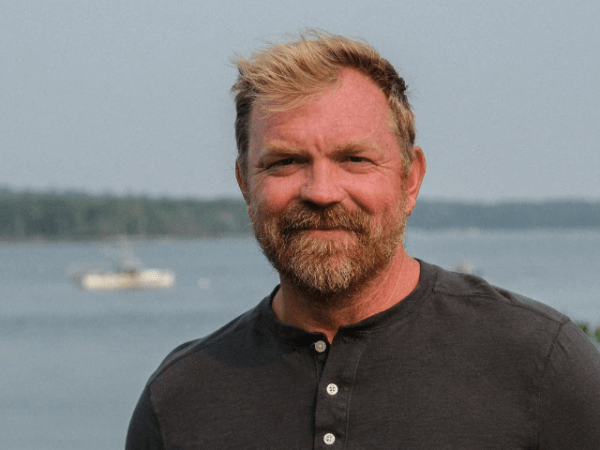
The Grahampaign – Graham Platner’s race for the Senate
_______________________________________________________________________________ September 25th, 2025 By: Henry Haile “America has entered a new Gilded Age–” says Graham Platner– the second to announce his candidacy for Senator Susan Collins’ Senate seat in Maine. The military veteran oysterman running against Collins and “the billionaire class that owns her and all of Washington” is taking an unconventional approach in…



Leave a Reply